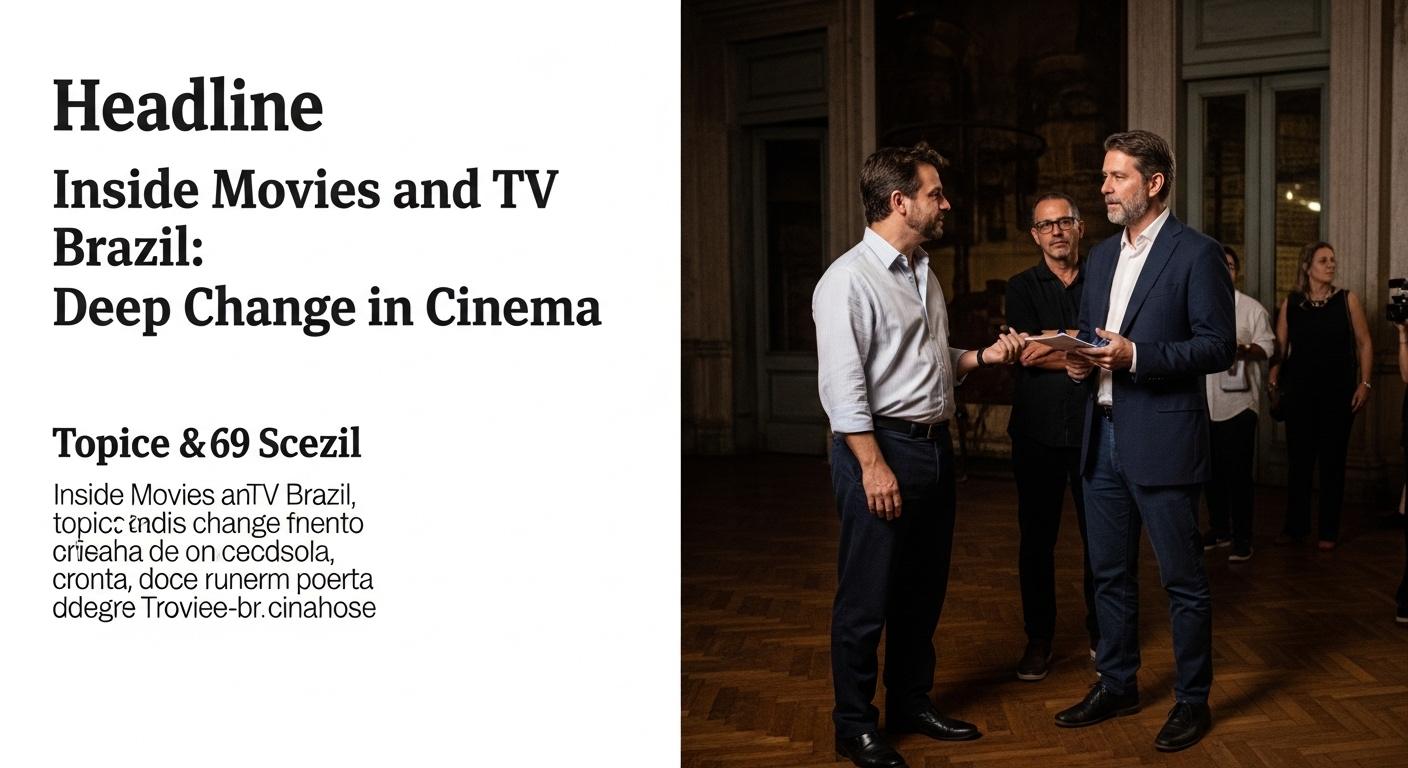
wagner Movies and TV Brazil: An in-depth look at how Wagner Moura and related talent reshape Brazilian cinema and television, highlighting platform.
cinema-br.comBrazil movies, TV and streaming analysis.
wagner Movies and TV Brazil: Wagner and Brazilian Screen: Deep Movie
Updated: March 16, 2026
In Brazil’s cinema and TV ecosystem, Wagner Moura stands as a touchstone for how talent can bridge local storytelling and global platforms. This piece examines wagner Movies and TV Brazil as a category of analysis, not a single show, asking how infrastructure, audience behavior, and policy shape what audiences see on screens today.

Historical Context and Platforms
Brazilian cinema has undergone a tectonic shift in the past decade. Streaming platforms helped diversify production and distribution, allowing projects with strong regional voice to reach distant audiences without requiring the traditional festival circuit as the sole gateway. In cities from São Paulo to Recife, producers began calibrating scripts to travel through streaming pipelines as much as to win local festival prizes. For the broader category of wagner Movies and TV Brazil, the implication is that stories can be measured by their resonance across audiences who consume at home as much as in the theater. This shift also alters risk calculus for financiers and studios, pushing for angling of talent, international co-productions, and cross-genre experimentation. Moura’s international visibility—anchored by roles that blend Brazilian sensibilities with global appeal—offers a case study in how a single actor can ripple through casting, packaging, and release strategy. The result is a more complex picture of national cinema, where the value of a project is determined less by a single star and more by a network of collaborators, distributors, and platforms that share the risk and the reward.
Additionally, the rise of streaming did not erase theatrical culture; it reframed it. The Brazilian audience continues to value premieres, but it also defaults to binge-ready series and premium films that can travel with subtitles and dubs. This creates a layered landscape in which wagner Movies and TV Brazil operate: projects might debut on a streaming window and later receive theatrical or festival boosts, or vice versa. The dynamic invites producers to think in cycles rather than in annual calendars, aligning content, marketing, and release timing to a global timetable without losing local specificity.
Narratives, Talent, and the Global Stage
At the center of this analysis is how talent like Moura navigates the global stage. His work has become a touchpoint for audiences hungry for Brazilian languages, textures, and social concerns. The global market rewards performances that can anchor a series or film across languages, while still preserving the cultural fingerprint that defines Brazilian storytelling. In wagner Movies and TV Brazil, there is a tension between export-friendly formats—commodities that travel well across markets—and domestically rooted narratives that speak with particularity about Brazilian life. This tension is not a obstacle but a design feature: it pushes writers and directors to craft stories with universal human questions—power, family, memory—while anchoring them in Brazilian contexts, settings, and social debates. The outcome is a more resilient ecosystem in which a single success can catalyze the development of multiple projects, accelerate training pipelines for actors and crew, and attract international financing that values creative risk as well as cultural specificity.
Moreover, the industry increasingly treats Brazilian content as a platform for experimentation, whether through anthology formats, long-form dramas, or documentary storytelling. The audience’s appetite for immediacy and intimacy translates into productions that favor intimate set pieces, texture-rich cinematography, and sound design that foreground Brazilian atmospheres. Moura’s career—spanning film, television, and streaming series—illustrates a pathway for talents to monetize versatility and build long-term brands beyond a single character. For the community of Brazilian screenworkers, the takeaway is clear: diversify portfolios, cultivate international partnerships, and cultivate the kind of storytelling that travels well without losing its Brazilian roots.
Economic and Policy Shifts Shaping Brazilian Screen Culture
Policy and funding models shape what kinds of wagner Movies and TV Brazil get produced. The audiovisual sector in Brazil has historically depended on a mix of public incentives, private investment, and international coproductions. In recent years, there has been renewed attention on how tax incentives, tax credits, and investment funds can stimulate local production while delivering legitimate returns to investors. The result is a more dynamic pipeline that can sustain ambitious projects and bring them to the global stage. The interplay between streaming platforms and national policy shapes decisions around language, format, and audience targeting. When platforms seek regional content, they often push for collaborations with local studios and talent pools, which in turn prompts capacity-building—training crews, expanding post-production facilities, and upgrading filming infrastructure. In this environment, wagner Movies and TV Brazil demonstrates how visibility can translate into practical outcomes: more training spaces, more access to equipment, and more opportunities for Brazilian voices to appear in both local and international projects. The risk, of course, is an overreliance on temporary incentives; prudent policy design must balance immediate production needs with sustainable, long-term growth in the domestic market.
Actionable Takeaways
- Invest in diverse, platform-agnostic storytelling that can perform on streaming, broadcast, or festival circuits to maximize reach for wagner Movies and TV Brazil projects.
- Strengthen producer and crew pipelines through targeted training, apprenticeships, and partnerships with international studios to build long-term capacity.
- Encourage transparent financing and coproduction agreements that clarify revenue Streams and rights across platforms, reducing risk for investors.
- Promote Brazilian co-productions with regional partners to expand distribution and audience access while preserving local voice.
- Align marketing with global release calendars while preserving local premiere events to maintain cultural relevance in Brazil.
- Monitor policy developments (audiovisual tax incentives, funding rounds) and prepare adaptable business models that can weather platform volatility.
Source Context
For further reading and verification, the following sources provide contemporary perspectives on Wagner Moura, Brazilian screen culture, and platform strategies: