
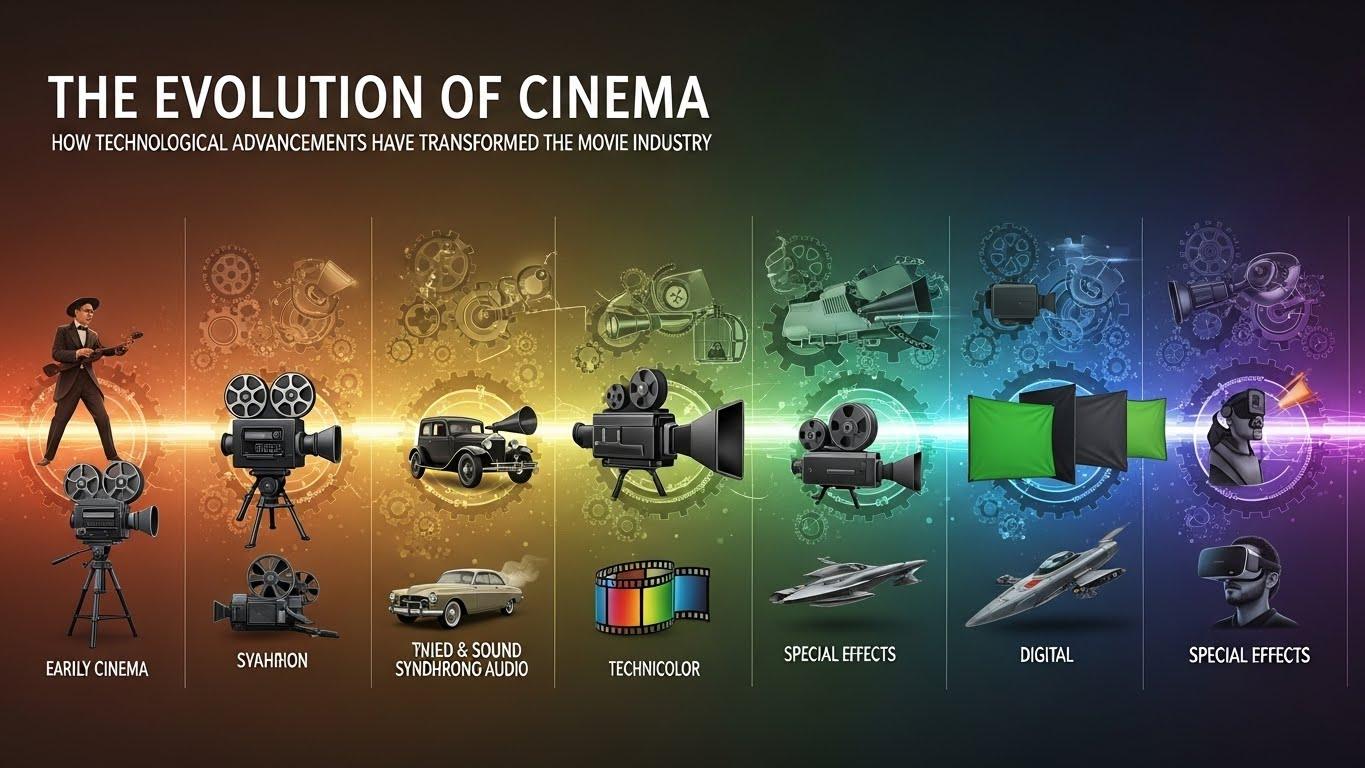
The Evolution of Cinema: How Technological Advancements Have Transformed the Movie Industry
The world of cinema has undergone a remarkable transformation since its inception over a century ago. From the silent films of the early 1900s to the immersive virtual reality experiences of today, technological advancements have continuously reshaped how movies are produced, distributed, and consumed. This evolution has not only enhanced the quality of films but also broadened their accessibility to a global audience. In this comprehensive exploration, we delve into the key technological milestones that have revolutionized the movie industry and examine their impact on filmmaking and audience engagement.
The Silent Era: The Birth of Film
The journey of cinema began in the late 19th century with the invention of the motion picture camera. The silent era, spanning from the 1890s to the late 1920s, was characterized by films without synchronized sound. Pioneers like the Lumière brothers and Georges Méliès introduced audiences to the magic of moving images. Despite the absence of sound, these early films captivated viewers with their innovative storytelling and visual effects.
During this period, technological advancements such as the development of celluloid film and the introduction of the Kinetoscope allowed filmmakers to create longer and more complex narratives. While the absence of dialogue posed challenges, it also encouraged filmmakers to experiment with visual storytelling techniques that laid the foundation for modern cinema.
The Introduction of Sound: The Talkies Revolution
The transition from silent films to “talkies” marked a significant turning point in the history of cinema. In 1927, the release of The Jazz Singer introduced synchronized sound to motion pictures, forever changing the audience’s cinematic experience. This innovation not only enhanced storytelling but also opened new avenues for musical and dialogue-driven films.

The impact of sound extended beyond the screen, influencing the development of cinema architecture. Theaters were redesigned to accommodate sound systems, leading to the rise of grand movie palaces. This era also saw the emergence of new genres, such as musicals and screwball comedies, which capitalized on the newfound ability to incorporate music and dialogue into films.
Color Films: Bringing Vibrancy to the Screen
While color experiments in film date back to the early 20th century, it wasn’t until the 1930s that color films became commercially viable. The introduction of Technicolor revolutionized the industry by adding a new dimension to storytelling. The vibrant hues of films like The Wizard of Oz and Gone with the Wind captivated audiences and set a new standard for visual excellence.
Color technology continued to evolve, with innovations such as Eastmancolor and digital color grading further enhancing the aesthetic appeal of films. Today, color is an integral part of filmmaking, used not only to create visual impact but also to convey mood and emotion.
The Digital Revolution: A New Era of Filmmaking
The late 20th century witnessed the rise of digital technology, which has arguably had the most profound impact on the movie industry. The transition from analog to digital filmmaking has streamlined production processes and expanded creative possibilities. Digital cameras and editing software have democratized filmmaking, allowing independent filmmakers to produce high-quality films on smaller budgets.
Moreover, the advent of computer-generated imagery (CGI) has transformed the visual landscape of cinema. Films like Jurassic Park and Avatar showcased the potential of CGI to create lifelike creatures and immersive worlds. This technology has become a staple in blockbuster filmmaking, enabling directors to bring their wildest imaginations to life.

The digital revolution has also impacted distribution, with the rise of streaming platforms like Netflix and Amazon Prime Video reshaping how audiences access films. These platforms have made films more accessible to global audiences, breaking down geographical barriers and providing a platform for diverse voices.
Virtual Reality and Augmented Reality: The Future of Cinema
As technology continues to advance, the future of cinema promises even more immersive experiences through virtual reality (VR) and augmented reality (AR). VR technology allows viewers to step inside a film, experiencing it from a first-person perspective. This level of immersion has the potential to redefine storytelling, offering audiences a unique and personal connection to the narrative.
AR, on the other hand, blends digital elements with the real world, creating interactive experiences that enhance storytelling. While still in its early stages, AR technology holds promise for creating engaging and interactive cinematic experiences that extend beyond the traditional screen.
Filmmakers and studios are exploring these technologies to create innovative content that captivates audiences in new ways. The potential for interactive storytelling and experiential cinema is vast, promising exciting developments in the years to come.
Conclusion: The Ever-Evolving Landscape of Cinema
The evolution of cinema is a testament to the power of technology to transform art and entertainment. From the silent films of the past to the digital and virtual experiences of today, each technological advancement has enriched the cinematic experience, offering new ways to tell stories and engage audiences.
As we look to the future, the possibilities for cinema are limitless. With the continued evolution of technology, filmmakers have the tools to push boundaries and create experiences that captivate and inspire. The movie industry stands at the cusp of a new era, one where storytelling will continue to evolve, driven by innovation and creativity.

For those who wish to delve deeper into the technological advancements that have shaped cinema, resources such as the Academy of Motion Picture Arts and Sciences and the British Film Institute offer extensive information on the history and future of filmmaking. As we celebrate the rich history of cinema, we can also look forward to the exciting possibilities that lie ahead in this ever-evolving art form.
The Impact of Technological Advancements on Film Genres
The technological evolution in cinema has not only affected the technical aspects of filmmaking but also influenced the development of various film genres. As new technologies emerge, filmmakers have been inspired to explore innovative storytelling methods, leading to the birth and transformation of genres.
One notable genre that has benefited from technological advancements is science fiction. The imaginative nature of sci-fi films often requires advanced visual effects to create futuristic worlds and extraordinary characters. With the advent of CGI and digital effects, filmmakers can now create highly detailed and realistic sci-fi environments that were once impossible to achieve. Movies like Blade Runner and Interstellar showcase the genre’s reliance on technology to bring complex narratives to life.
Similarly, the action genre has undergone significant changes thanks to advancements in stunt coordination and special effects. Modern action films often feature high-octane sequences that blend practical stunts with digital enhancements, creating seamless and thrilling experiences for audiences. The use of motion capture technology has also allowed for more dynamic and realistic action scenes, as seen in films like The Avengers series.
The Role of Artificial Intelligence in Filmmaking
Artificial Intelligence (AI) is another technological advancement that is beginning to make its mark on the film industry. AI is being integrated into various aspects of filmmaking, from scriptwriting to post-production, offering new tools for creativity and efficiency.

One area where AI is proving invaluable is in the analysis of audience data. Filmmakers and studios can use AI to analyze viewer preferences and predict trends, helping them make informed decisions about the types of films to produce. This data-driven approach not only increases the likelihood of a film’s success but also allows for more targeted marketing strategies.
AI is also being used to streamline the editing process. Automated editing tools can analyze hours of footage and suggest edits based on predefined criteria, significantly reducing the time and effort required in post-production. While human editors are still crucial for creative decision-making, AI offers valuable assistance in managing large volumes of content.
The Influence of Social Media on Film Promotion and Distribution
The rise of social media platforms has dramatically altered the landscape of film promotion and distribution. Filmmakers and studios now have direct access to audiences worldwide, allowing them to engage with fans and build anticipation for upcoming releases.
Social media platforms like Twitter and Instagram provide filmmakers with the tools to share behind-the-scenes content, engage in conversations with fans, and create viral marketing campaigns. This direct interaction fosters a sense of community and allows filmmakers to receive instant feedback from their audience.
Furthermore, social media has democratized film criticism and discussion, with audiences sharing reviews and opinions in real-time. This shift has given rise to new influencers and critics whose opinions can significantly impact a film’s reception and box office performance.
The Challenges and Opportunities of Technological Advancements
While technological advancements have brought numerous benefits to the film industry, they also present challenges that filmmakers and studios must navigate. One major concern is the potential loss of traditional filmmaking techniques as digital processes become more prevalent. The tactile experience of shooting on film and the craftsmanship involved in practical effects are at risk of being overshadowed by digital alternatives.

Moreover, the rapid pace of technological change can lead to increased production costs, as studios invest in the latest equipment and software to stay competitive. Independent filmmakers, in particular, may face financial constraints as they strive to keep up with industry standards.
However, these challenges also present opportunities for innovation and creativity. As technology continues to evolve, filmmakers have the chance to experiment with new storytelling techniques and push the boundaries of what cinema can achieve. The blending of traditional and digital methods can result in unique and compelling films that capture the imagination of audiences worldwide.
Conclusion: Embracing the Future of Cinema
The evolution of cinema is a dynamic and ongoing process, driven by the relentless march of technology. From the introduction of sound and color to the rise of digital filmmaking and virtual reality, each advancement has left an indelible mark on the industry, shaping the way stories are told and experienced.
As we look toward the future, it is clear that technology will continue to play a pivotal role in the evolution of cinema. Filmmakers must embrace these changes, leveraging new tools and techniques to create innovative and engaging films that resonate with audiences. By balancing tradition with innovation, the film industry can continue to thrive, offering captivating stories that inspire and entertain for generations to come.
For more insights into the future of cinema, consider exploring resources such as the Sundance Institute and The Verge, which provide valuable information on emerging technologies and trends in the film industry. As we celebrate the past and embrace the future, the possibilities for cinema remain as vast and limitless as the imagination itself.
About the Author