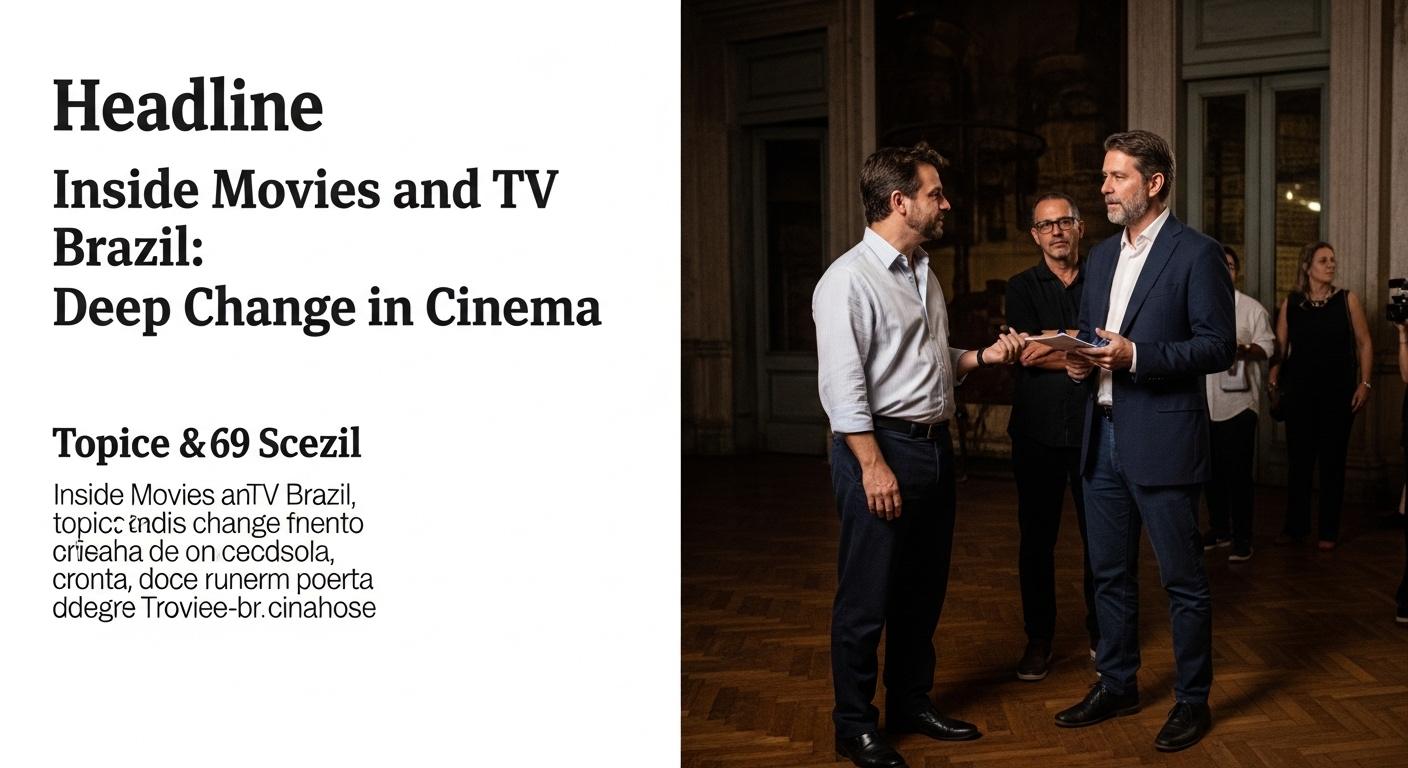
wagner Movies and TV Brazil: An editorial on Wagner Moura’s impact on Brazil’s film and TV scene and how streaming and cinema intersect the country’s.
In Brazil’s evolving media climate, the phrase wagner Movies and TV Brazil surfaces as a lens to understand how celebrity, national storytelling, and streaming ambition intersect. This analysis examines how Wagner Moura’s career—rooted in Brazilian cinema and expanded to international TV—reflects a broader shift in the country’s entertainment ecosystem, where local voices must compete with global platforms while preserving cultural resonance.
Context: Brazil’s cinema and TV ecosystem
Brazil’s cinema and television market remains one of Latin America’s most productive, but it is also one of its most fragmented. A large audience consumes content across a mosaic of platforms, from public broadcasters and national networks to international streaming services. Domestic productions often rely on a mix of public funds, tax incentives, and co-productions that cross borders yet aim to reflect Brazilian life in its plural forms. The rise of streaming platforms has sharpened competition for local stories, pushing producers to balance tradition—neighborhoods, favela, samba, work-life comedy—with modern genres such as prestige dramas and serialized formats.
In this environment, a figure like Moura embodies two forces: a track record of widely recognized Brazilian cinema and a growing presence on platforms beyond Brazil’s borders. His career demonstrates how Brazilian actors can leverage global distribution to secure better terms at home, while also inviting an international audience to see Brazilian narratives as part of a shared global conversation.
Streaming, theaters, and the Brazilian audience
Streaming growth in Brazil has not merely added a new distribution channel; it has altered how content is conceived. Series and feature films are increasingly designed with global audiences in mind, yet Brazilian viewers remain deeply attached to local rhythms, languages, and social dynamics. Platforms entering Brazil—whether established streaming giants or regional players—often pair their releases with theatrical windows, festivals, and partnerships that help films travel to cinemas and compete for critical attention. This tension between online accessibility and in-theater visibility shapes production schedules, casting choices, and even the kinds of stories that attract limited-series budgets.
Wagner Moura’s continued relevance matters because it signals a bridge between traditional Brazilian cinema and the streaming era. When a star known for nuanced performance heads projects intended for broad streaming reach, producers gain leverage to negotiate more generous creative terms and to attract co-financing from international partners. The result can be deeper character work, riskier formats, and more ambitious production design.
Policy, economics, and the road ahead
Brazilian policy and the economics of content creation influence what gets made and how it is distributed. Tax incentives for local productions, IP protections, and funding programs shape the pipeline from development to distribution. The growing presence of streaming platforms also raises questions about cultural preservation, accessibility, and labor standards in a sector that has historically relied on television networks and cinema chains for sustainability. A pragmatic approach to the coming years involves aligning the incentives of studios, streaming services, and cultural institutions so that Brazilian voices can scale internationally without losing their distinct social texture.
Within this frame, the public perception of national cinema and the careers of actors like Moura become more than celebrity footnotes. They are signals that Brazilian storytelling can be both locally rooted and globally legible. The challenge is to ensure that success stories remain inclusive—supporting diverse regional voices, genres, and production methods—so that wagner Movies and TV Brazil can be a map for multiple pathways rather than a single ladder to international podiums.
Future scenarios for wagner Movies and TV Brazil
Looking ahead, the industry could see a more intentional integration of Brazilian talent within global franchises, alongside homegrown prestige series that exploit streaming’s capacity for long-form storytelling. This would involve co-productions and talent exchanges that keep production conditions fair and creative control in Brazilian hands. A successful path would also hinge on regional collaboration—smaller cities and underserved communities becoming hubs for new genres, while streaming platforms fund development pipelines that feed into theaters, festivals, and school programs. If done well, the result would be a diversified ecosystem where a single star—Moura or another—becomes an emblem for a broader, more resilient Brazilian cinema and TV industry.
Actionable Takeaways
- Producers: Build story pipelines that combine strong local voices with international appeal, leveraging partnerships with streaming platforms to secure broader financing and distribution.
- Distributors and exhibitors: Create hybrid release strategies that optimize visibility across cinemas and home viewing, using film festivals to build critical momentum.
- Policy and funders: Expand local content incentives and ensure IP protections, while supporting local talent development and cross-border co-productions that benefit Brazilian storytelling.
- Educators and industry: Invest in training that bridges performance, production design, and digital distribution to prepare a workforce capable of navigating the streaming era.
- Audienses and creators: Embrace regional authenticity in genre experimentation, reinforcing a feedback loop between viewers’ preferences and creators’ ambitions.